Common Scams


What Are KYC Scams?
KYC documents are the most important when it comes to banking and other financial activities. However, many misuse them for criminal reasons.
KYC documents are the most important when it comes to banking and other financial activities. However, many misuse them for criminal reasons.
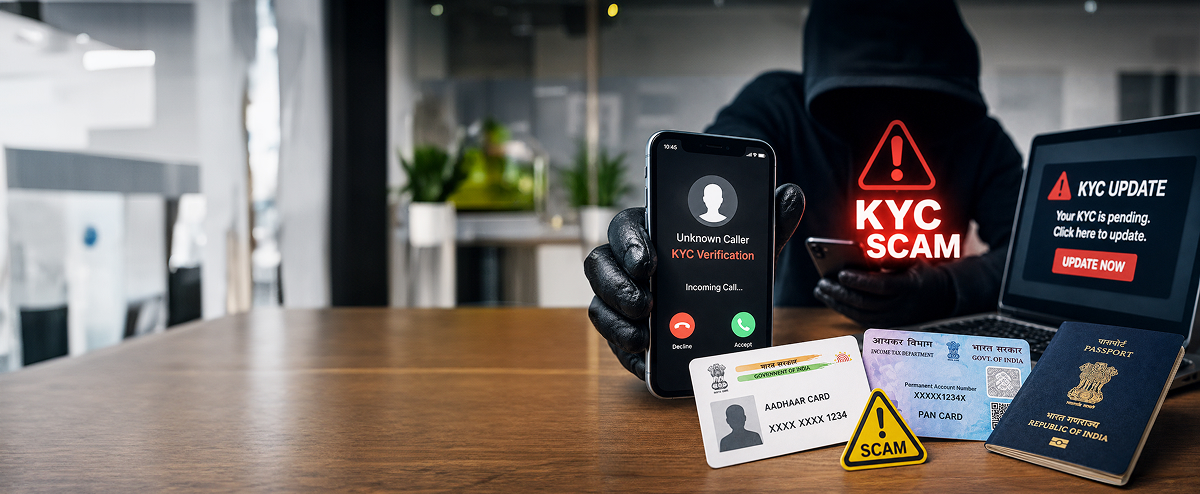

D o you remember the ID card that you used to get when you were a school student? It was to ensure your identification, to verify that the person wearing it is really you.
Similarly, banks also have an identification process, and it’s called KYC – Know Your Customer.
This is a security check that helps banks to safeguard you from identity theft or fraud. KYC verifies by confirming your identity via documents such as your PAN Card or Aadhaar Card. The problem occurs when cybercriminals or scammers pretend to be official authorities or part of a bank, and under the guise of KYC, they end up extracting personal information or money.
In a very recent case in Raipur, two authorised SIM retailers were arrested by the cyber police. They allegedly used the KYC process (which included Aadhaar verification and a biometric system) as part of their formality whenever customers arrived to get a new SIM card. These retailers then sold those numbers and other information to cybercriminals. These were later used in various cyber offences.
Also Read: What is the Income Tax Refund Scam?
1. Scammers pose as legitimate institutions. This makes the scam seem real, and people automatically respond to them after seeing official logos or email addresses, most often belonging to banks or insurance companies. Links to fake websites are also often shared, serving as a portal for you to share your KYC information.
2. They contact you repeatedly. They send emails, calls or texts with a variety of claims, such as your KYC details need to be provided, your KYC documents are about to expire, your bank account may be suspended and funds frozen in the process, etc. The cybercriminals threaten you with legal action if details are not shared immediately.
3. All of this is done to create a sense of panic and urgency. Once you’re scared, it’s easier to act without thinking.
4. The information asked to be shared is sensitive information, such as Aadhaar numbers, bank account numbers, passwords, etc. Sometimes, they may even ask you to submit copies of your KYC documents.
5. To make the situation worse, the cybercriminals can ask you to install certain apps that allow the scammers to control the victim’s phone without their knowledge.
6. With enough information, the scammers can get access to your bank account very easily and transfer money to themselves (money laundering).
KYC is used as the method for these scams because it’s a “legitimate” way to ask for identity documents. It’s a known fact that KYC is a process used by authorised banks, making people fall for this trap. The feeling of urgency (“you have to complete this within 5 minutes, otherwise your account will be blocked”) accompanied by an exterior of authority, can often make people trust the scammers easily.
1. Always verify first. Even the seemingly legitimate numbers or email addresses can be scammers trying to steal information. Contact the bank from which the KYC warning seems to be coming to confirm.
2. Do not get carried away under panic or urgency. Think carefully since it’s your personal information and finances in question.
3. Your OTP, password or PIN is not to be shared with anyone.
4. Do not click random links or install apps because a person asks you to.
In the unfortunate situation of you getting trapped in a KYC scam, it’s important to remember to cut off any access that the scammer may have, to you or your information.
1. Block everything. Contact your bank through their customer care number, preferably within the first few hours of the scam, the sooner the better. Ask for all accounts and net banking access to be blocked, even digital wallets. You want to cut off any method that a scammer can use to extract your money.
2. Gather evidence for complaints. This includes chat history, calls, screenshots of any website or app the scammers may have used etc.
3. File a dispute/complaint letter to the bank. Oftentimes, KYC scams also happen due to a security breach from the bank’s part or without you sharing your documents. In this case, you have zero liability, and the fraud occurs due to bank negligence, so the bank may be able to refund you after a KYC scam if you report it to the bank within 3 working days.
4. Report to Cyber Police. Immediately contact the National Cyber Crime Helpline or visit the portal online to submit a report.
However, despite the fear of a scam, it is important to be aware that KYC as a process itself, is also an important security method to ensure the safety of your finances and to verify your identity.
So, one should be responsible and careful while sharing any personal information, as it can lead to identity theft or money laundering. Any KYC process should only happen through a bank’s official channels. Any other system used, such as OTP, PIN or downloading of a dubious app, is immediately suspicious, and you should check its legitimacy thoroughly as soon as possible.
An authorised bank will never ask for confidential information through texts or calls.



Bedigisafe.com aims to be the go-to online repository of educational resources on digital safety for all generations, offering comprehensive guidance on topics such as social media safety, financial transactions, and fact-checking information related to online security.


Connect, share, make your friends and family safe.